News Details
Health Ingredients • OEM & ODM • Reliable Quality
Health Ingredients • OEM & ODM • Reliable Quality
Triterpene glycosides represent a class of cyclic cycloartane molecules bonded to sugar moieties, widely recognized as the primary bioactive marker compounds of Black Cohosh, botanically named Actaea racemosa (syn. Cimicifuga racemosa). This perennial herb belongs to the Ranunculaceae family. The rhizome and root portions are the commercial raw material source, where triterpene glycosides naturally accumulate. These marker compounds are the global industry standard used to evaluate the consistency, authenticity, and quality of black cohosh botanical raw material for nutraceutical manufacturing.
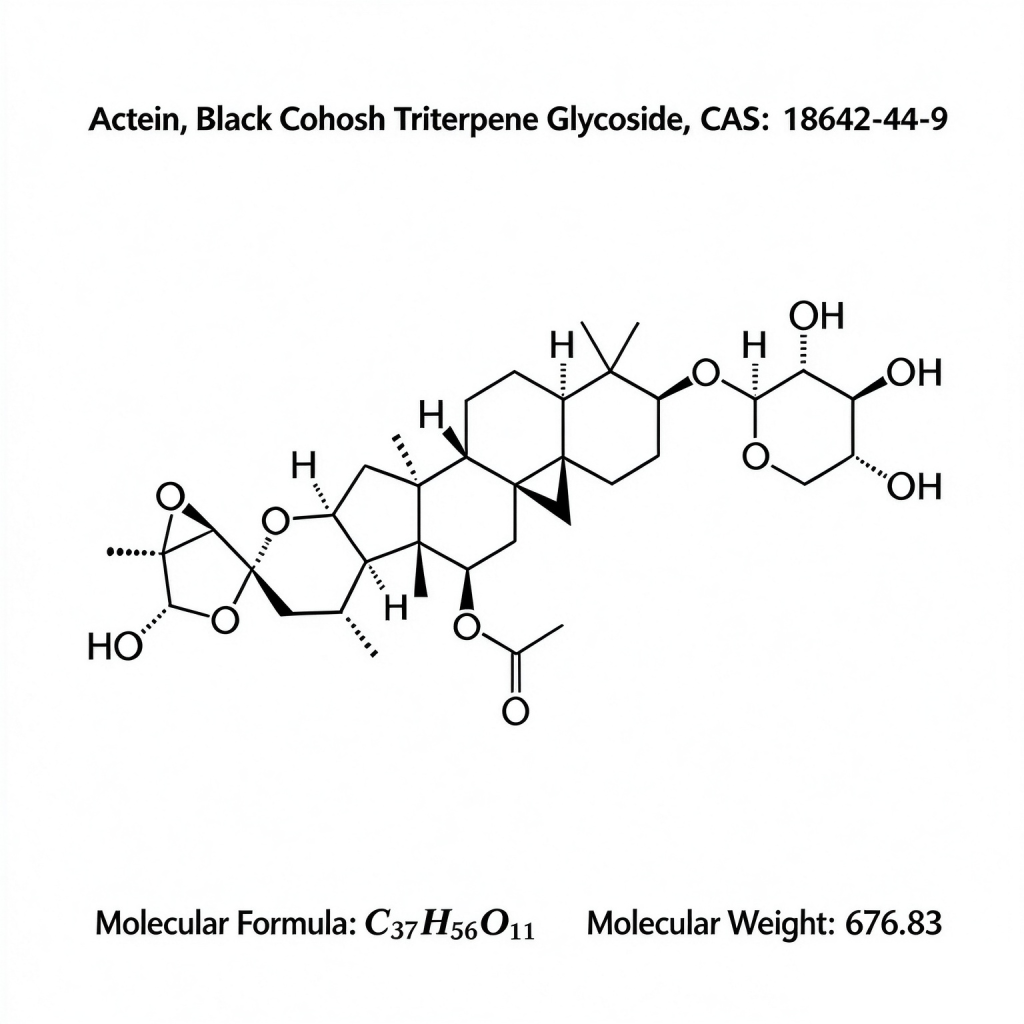
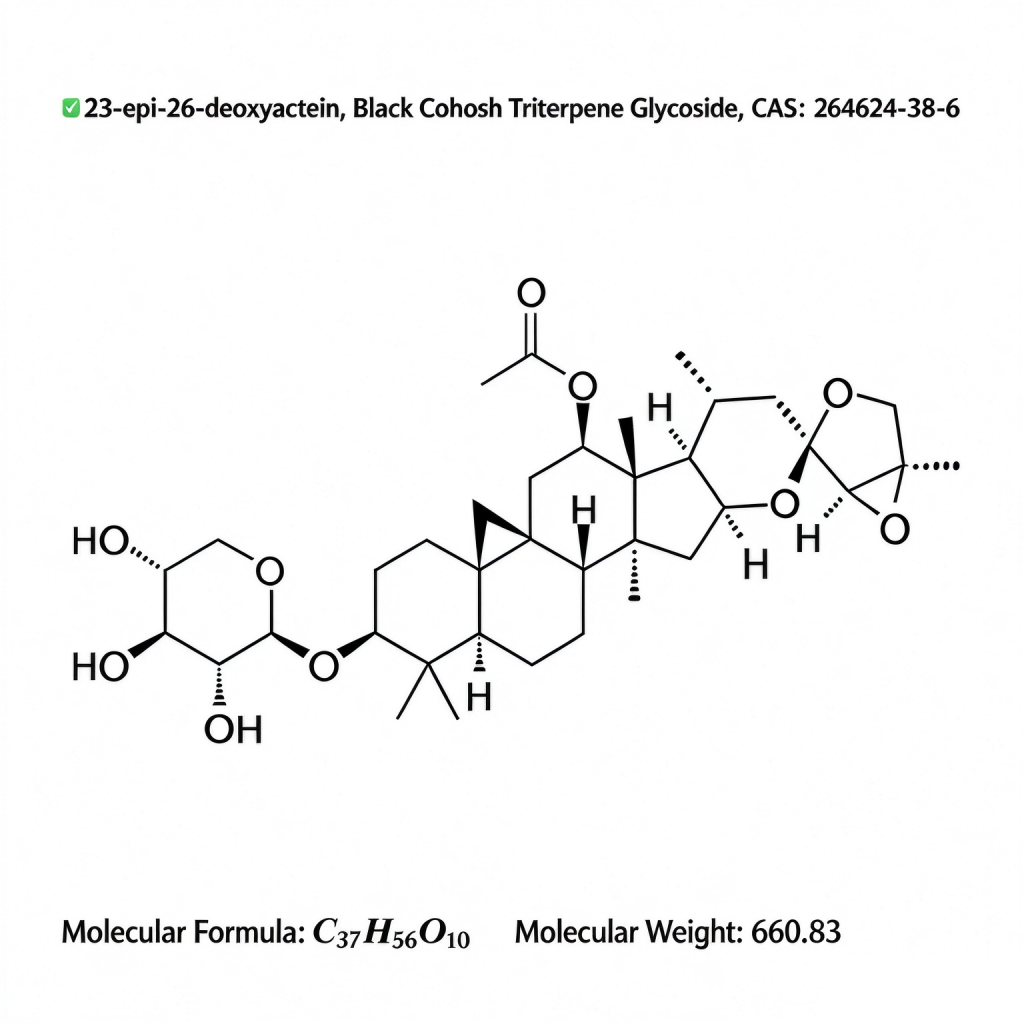
The triterpene glycoside fraction of black cohosh is a complex mixture rather than a single isolated substance. For quality control purposes, the most commonly monitored markers include actein, 23‑epi‑26‑deoxyactein, cimicifugoside, cimigenol, and cimigenol xyloside.
| Marker Compound | Brief Role in Quality Control |
|---|---|
| Actein | Primary quantitative marker for HPLC testing |
| 23‑epi‑26‑deoxyactein | Core marker used together with actein for specification control |
| Cimicifugoside | Major cycloartane glycoside present in black cohosh |
| Cimigenol / Cimigenol xyloside | Supporting markers used for fingerprint and profile evaluation |
These cycloartane-type triterpene glycosides are considered the most relevant markers for standardization. In the international botanical ingredient trade, black cohosh extract is typically standardized to total triterpene glycosides, rather than to one individual compound alone.
In addition to triterpene glycosides, black cohosh raw material naturally contains phenolic acids, flavonoids, tannins, fatty acids, and volatile oils. These constituents may contribute to the overall chemical profile, but triterpene glycosides remain the primary standardization index for commercial black cohosh extract.
Quality control of black cohosh extract generally follows two complementary objectives: quantification of triterpene glycosides and verification of botanical identity.
HPLC is the mainstream analytical method used to measure the content of total triterpene glycosides in black cohosh extract. For our 5% standardized black cohosh extract, HPLC is applied to verify that the finished material meets the specified triterpene glycoside level.
Because triterpene glycosides exist as a mixture, HPLC results are typically evaluated against a defined marker profile rather than a single peak alone. This approach helps ensure batch-to-batch consistency.
HPTLC is often used as a complementary identity test. By comparing the fingerprint pattern of a test sample with a reference standard or authenticated material, HPTLC helps confirm that the raw material is genuine Actaea racemosa. This is particularly important for reducing the risk of adulteration or substitution with other botanically related materials.
| Test Type | Common Purpose in Black Cohosh QC |
|---|---|
| HPLC | Quantification of total triterpene glycosides |
| HPTLC | Verification of botanical identity and fingerprint comparison |
Triterpene glycosides from black cohosh show moderate solubility in ethanol and limited solubility in water. This solubility profile can influence formulation design, especially when developing powdered extracts for capsules, tablets, or blends.
In commercial practice, standardized black cohosh extract is often presented as a powdered ingredient. When required, carriers such as maltodextrin may be used to improve powder flowability, reduce caking, and support more homogeneous mixing. This is a common industrial practice in botanical extract manufacturing and finished product development.
Black cohosh extract containing triterpene glycosides is widely used in women’s health dietary supplement formulations. However, it is important to note that triterpene glycosides from black cohosh are not classified as phytoestrogens and are not typically standardized for estrogenic activity.
When purchasing black cohosh extract for nutraceutical production, buyers should review several key quality points:
Different suppliers may use slightly different standardization approaches, so it is important to confirm the exact marker profile and test method before including the material in a finished formula.
Triterpene glycosides are the primary bioactive markers used to standardize and control the quality of black cohosh extract. Key markers include actein, 23‑epi‑26‑deoxyactein, cimicifugoside, cimigenol, and cimigenol xyloside. HPLC is used for quantification, while HPTLC supports botanical identity verification. For B2B buyers, confirming the test method, marker profile, and COA documentation is essential for reliable ingredient sourcing.
[Request a COA / Quote] (https://www.thsway.com/contact-us/)
[View Black Cohosh Extract Page](Black Cohosh Extract | Triterpene Glycosides Ingredient)