News Details
Health Ingredients • OEM & ODM • Reliable Quality
Health Ingredients • OEM & ODM • Reliable Quality
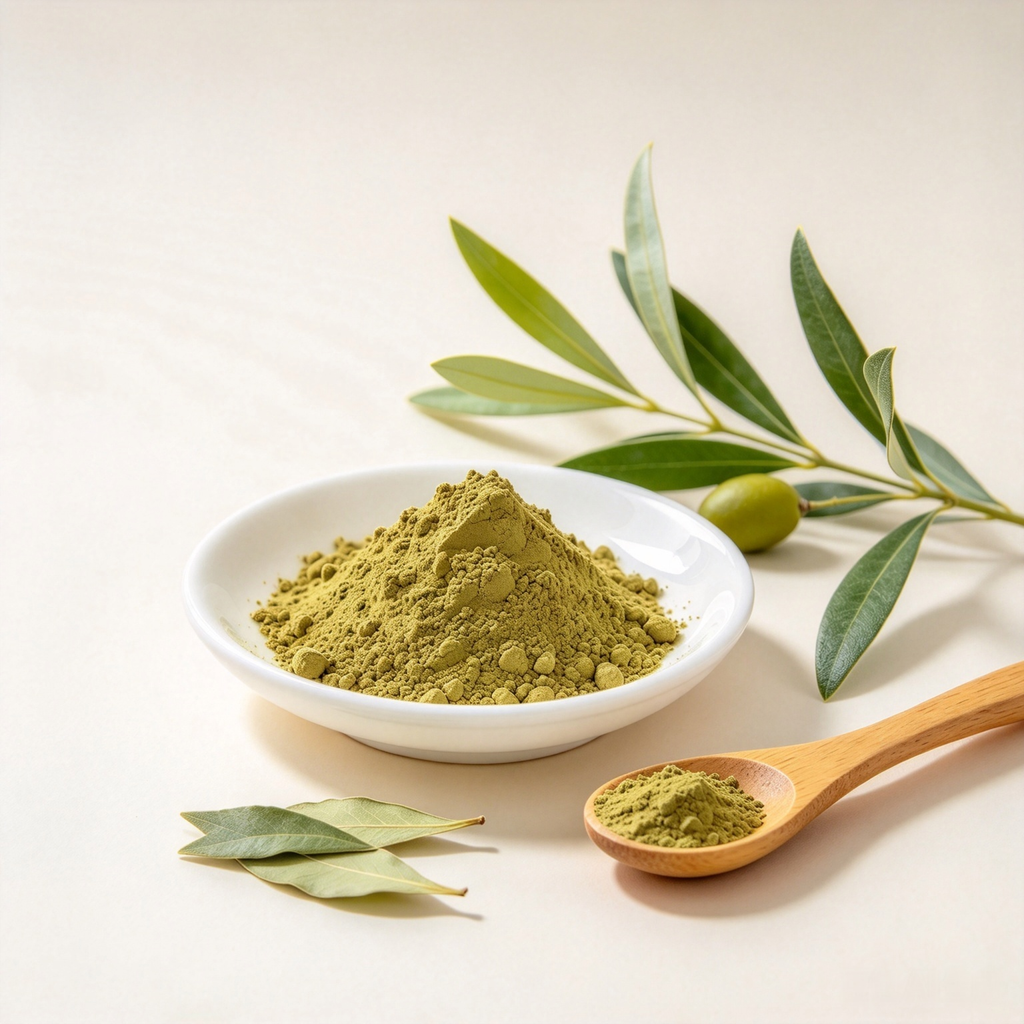
Olive leaf extract is a polyphenol‑rich botanical ingredient obtained from the leaves of Olea europaea. Unlike olive fruit extract sourced from olives, this raw material draws bioactive substances mainly from Olive leaf extract from Olea europaea is a polyphenol‑rich botanical ingredient used in nutraceuticals and cosmetics. This guide focuses on olive leaf extract oleuropein, hydroxytyrosol, plant characteristics and practical formulation guidance.
The chemical composition of olive leaves has been studied in relation to secoiridoid polyphenols and oleuropein content.
Olea europaea, the Mediterranean olive tree, grows widely across southern Europe, North Africa and parts of western Asia. Most people know olive fruit for olive oil, but olive leaves also accumulate unique plant compounds that do not appear at equally high levels in olive fruit.
Not all leaves from the olive tree deliver the same chemical profile. Mature older leaves usually contain higher polyphenol concentrations than young tender new‑growth leaves. Season also matters. Leaves harvested in summer under strong sunlight tend to build more secoiridoid polyphenols. Shaded or autumn‑harvested leaves often show lower active compound levels.
After picking, plant compounds remain chemically active. Oleuropein inside fresh leaves can change during drying and storage. Heat, moisture and oxygen exposure may accelerate this process. Proper post‑harvest handling helps protect oleuropein and related phenolic compounds.
The chemical profile of olive leaf extract centers on polyphenols, especially secoiridoid‑type compounds. Oleuropein is the dominant signature compound in raw olive leaf material. It is closely associated with the antioxidant properties for which this ingredient is known.
Oleuropein belongs to the secoiridoid class. Its structure includes a hydroxytyrosol moiety linked to a glucoside group. This molecular arrangement is part of why olive leaf extract behaves differently from some other polyphenol‑rich ingredients.
Hydroxytyrosol is another high‑value polyphenol. In fresh olive leaves, hydroxytyrosol is usually present at relatively low concentrations. Most hydroxytyrosol forms when oleuropein breaks down through hydrolysis. This change can occur naturally during drying, storage or industrial extraction.
Because hydroxytyrosol can derive from oleuropein, the two markers are often discussed together. However, they are not identical. Olive leaf extract standardized for oleuropein may contain only moderate hydroxytyrosol levels unless processing conditions are specifically controlled.
Besides oleuropein and hydroxytyrosol, olive leaf extract also contains flavonoids such as luteolin and rutin. These compounds contribute to the overall phenolic profile but should not be confused with oleuropein.
📌 Industry knowledge note for formulators Total polyphenol value is the sum of many phenolic substances. It includes secoiridoids, flavonoids and other phenolics. A high total polyphenol result does not guarantee high oleuropein. For standardized olive leaf extract, oleuropein should be measured separately by HPLC.
Olive leaf extract is used in several finished‑product categories. In nutraceuticals, it appears in antioxidant‑focused supplements, immune‑support blends and cardiovascular‑health products. It is also used in topical antioxidant cosmetics.
Common oral forms include hard capsules, softgels, tablets, gummy supplements and custom powder premixes. Powder grades are typical for solid supplements. Water‑soluble modified grades are more suitable for functional beverages and liquid cosmetic serums.
Formulators should note that oleuropein is chemically sensitive. It may degrade under extreme acidic or alkaline conditions. Small‑batch compatibility testing before full production is recommended for liquid applications.
When evaluating olive leaf extract, focus on practical checks:
Higher oleuropein content is not always the best choice. The right grade depends on product positioning, regulatory requirements and project budget.
Looking for olive leaf extract specifications or samples?Hunan Tenghui supplies HPLC‑verified Olea europaea olive leaf extract with batch‑matched COA documentation and stable bulk supply for nutraceutical and cosmetic brands worldwide.
[Request a COA / Quote] (https://www.thsway.com/contact-us/)
[View Olive Leaf Extract Product Page](Olive Leaf Extract | Oleuropein 40% Hydroxytyrosol 5%)